Food Safety Training Hub 2026








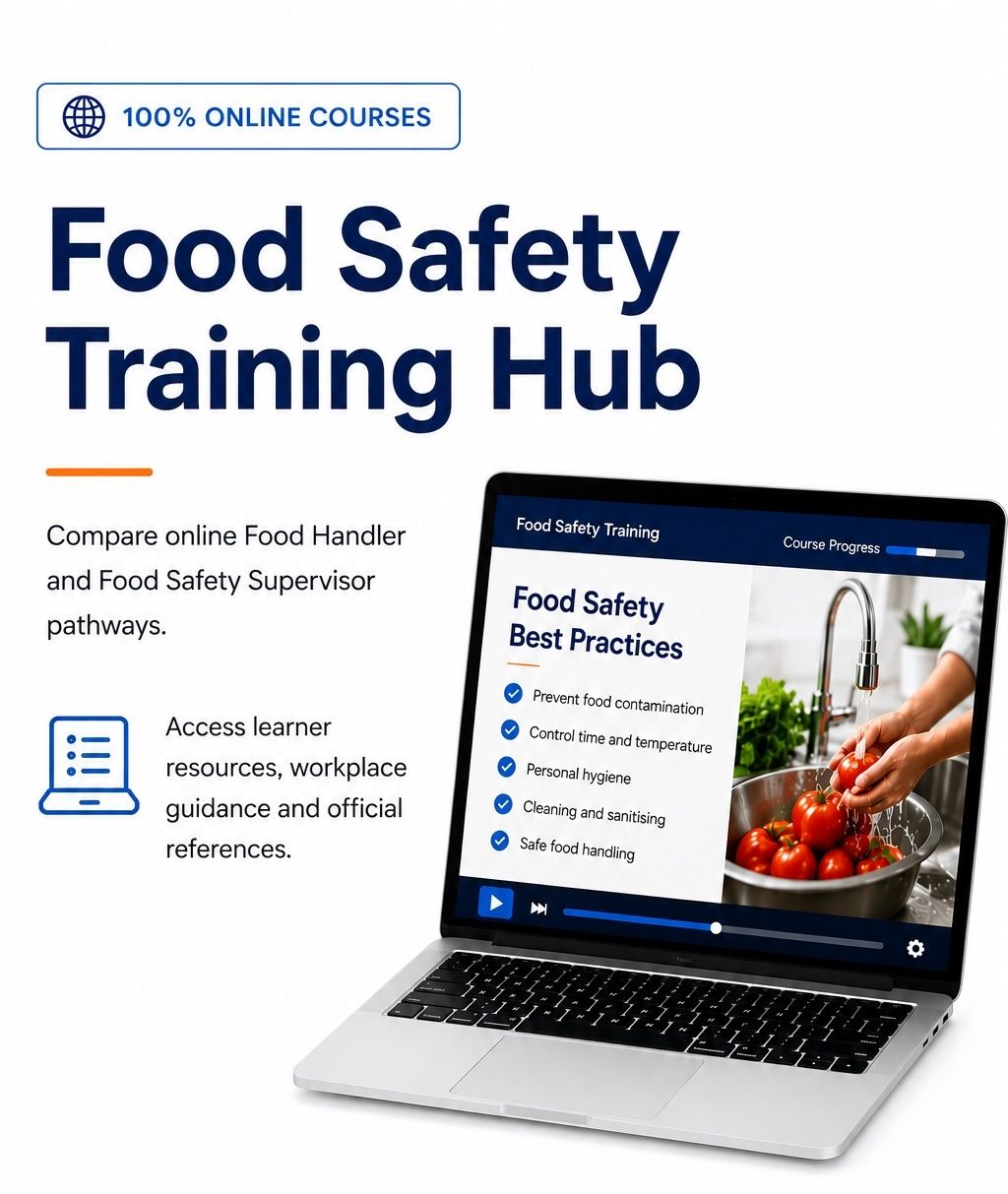
Access All Areas Training specialises in compliance training for the hospitality sector — including restaurants, cafes, bars, hotels, clubs, bottle shops, catering businesses, and food retail venues. The food safety guidance on this page is written specifically for hospitality and food service operators.
It does not cover food safety training requirements for the health sector, aged care sector, or other regulated industries — those sectors have separate unit requirements (including HLT units administered by AHPRA-regulated bodies) that are outside AAAT's scope. If you work in healthcare, aged care, or early childhood, please check with your relevant state health authority for the correct training pathway.
Food safety training is required for people who prepare, handle, store, display, serve or supervise food in Australia. Getting the right training pathway matters — the wrong course can leave a business non-compliant with Standard 3.2.2A or the specific requirements of your state or territory.
This Food Safety Training Hub has been created by Access All Areas Training to help food handlers, food businesses, employers and Food Safety Supervisors understand the two main training pathways, navigate Standard 3.2.2A obligations, access current state and territory guidance, and find practical workplace tools.
AAAT is an ASQA-registered RTO (52312) and an NSW Food Authority Approved Provider (25813). This means AAAT can issue the NSW Food Authority FSS certificate required for NSW food businesses — not all RTOs can do this.
NSW Food Authority Provider 25813: AAAT is an NSW Food Authority Approved Provider (25813). The NSW FSS certificate can only be issued when a student completes both SITXFSA005 (Use Hygienic Practices for Food Safety) and SITXFSA006 (Participate in Safe Food Handling Practices) — completing both core units is what authorises AAAT to issue it. Not all RTOs are approved. Confirm your provider's status at foodauthority.nsw.gov.au before enrolling.
Resource currency: Food-safety requirements, legislation and accepted training pathways can change. State and territory implementation of Standard 3.2.2A can vary. Confirm current requirements with the relevant regulator, local council where applicable, and your workplace before enrolling or appointing an FSS. Last reviewed: June 2026.
Which Food Safety Pathway Do You Need?
Food handler training is appropriate for workers who handle food as part of their role. In Australia, a food handler is any person who directly engages with food — preparing it, cooking it, serving it, storing it, packaging it, displaying it, or cleaning food-contact surfaces and equipment.
The nationally recognised unit is SITXFSA005 — Use Hygienic Practices for Food Safety. It covers personal hygiene, contamination prevention, organisational food-safety procedures, and the identification and control of food hazards. It is the foundation unit for food safety in Australia and is a prerequisite for the Food Safety Supervisor (FSS) qualification.
Who Typically Needs Food Handler Training
• Cafe and restaurant workers — kitchen staff, front-of-house, baristas
• Hotel, bar and club staff who prepare, serve or handle food
• Catering staff, event food workers and food truck operators
• School canteen workers and volunteers
• Aged care, disability and healthcare food-service workers
• Childcare and early learning centre workers who handle food
• Supermarket, deli and food-retail staff handling unpackaged food
• Community food-service and not-for-profit food event volunteers
Food Handler Training and Standard 3.2.2A
Under Standard 3.2.2A — Food Safety Management Tools (enforceable from December 2023), food businesses that are Category 1 or Category 2 are required to ensure food handlers have completed appropriate food safety training. This is one of the three tools under the Standard.
Category 1 businesses (food service, catering, restaurants, cafes, clubs, hotels, aged care, childcare) must have all food handlers trained and maintain evidence of that training.
Category 2 businesses (food retail where food is sold unpackaged but not processed onsite — delis, supermarket deli counters) must have food handlers trained but the evidence tool is not required.
SITXFSA005 satisfies the food handler training requirement under Standard 3.2.2A. A Food Safety Supervisor who holds SITXFSA005+SITXFSA006 automatically satisfies the food handler training requirement for themselves — they do not need a separate food handler certificate.
A Food Safety Supervisor (FSS) is a person who oversees and manages food-safety practices in a food business. Under Standard 3.2.2A, most food businesses that prepare or sell unpackaged, potentially hazardous, ready-to-eat food must appoint a certified Food Safety Supervisor.
The FSS must hold a current Statement of Attainment covering SITXFSA005 (Use Hygienic Practices for Food Safety) and SITXFSA006 (Participate in Safe Food Handling Practices), or SIRRFSA001 (Handle Food Safely in a Retail Environment) for retail-sector businesses. The certificate is valid for 5 years, after which recertification is required.
The FSS Must Be Reasonably Available
FSANZ specifies that a Food Safety Supervisor must be:
• In a position to oversee food handling operations at the premises
• Involved in day-to-day food-handling operations
• Reasonably available as a point of contact for food handlers
• Reasonably available as a point of contact for authorised officers (environmental health officers)
The FSS does not have to be the owner or manager — any trained, certified staff member can hold the role. However, the FSS must be actually present at or available to the premises during food-handling activities, not simply listed on paper.
How Many FSS Does a Business Need?
Standard 3.2.2A requires at least one FSS per food premises. For businesses that operate across shifts or extended hours, appointing more than one FSS is practical — when the primary FSS is absent, another trained FSS can cover the requirement. For multi-site businesses, each separate premises requires its own FSS.
NSW: If a business FSS leaves or changes roles, the business must replace the FSS within 30 operational days to remain compliant under NSW Food Authority requirements.
Food Safety Supervisor vs Food Handler
• Who needs it
– Food Handler: Workers who handle food in any capacity
– Food Safety Supervisor: At least one person per food premises responsible for oversight
• Training unit
– Food Handler: SITXFSA005 (Use Hygienic Practices for Food Safety)
– Food Safety Supervisor: SITXFSA005 + SITXFSA006 (hospitality) or SIRRFSA001 (retail)
• Covers
– Food Handler: Personal hygiene, contamination, food hazards, organisational procedures
– Food Safety Supervisor: All food handler content PLUS food safety management, supervising others, corrective action
• Certificate validity
– Food Handler: No formal expiry on Statement of Attainment
– Food Safety Supervisor: 5 years — recertification required
• NSW specific requirement
– Food Handler: No NSW government certificate required
– Food Safety Supervisor: NSW Food Authority FSS certificate required — only approved RTOs can issue it
• AAAT price
– Food Handler: $59
– Food Safety Supervisor: $138–168 depending on state package
• Time to complete
– Food Handler: 2–3 hours online
– Food Safety Supervisor: 4–6 hours online
Food Safety Standards and Workplace Responsibilities
Standard 3.2.2A — Food Safety Management Tools is a national food safety standard developed by Food Standards Australia New Zealand (FSANZ) that became mandatory on 8 December 2023, following a 12-month transition period. It applies to food service, catering and related retail businesses in Australia that handle unpackaged, potentially hazardous food that is ready to eat.
Standard 3.2.2A extends Standard 3.2.2 (Food Safety Practices and General Requirements) by introducing three specific management tools that certain businesses must implement to improve food safety outcomes.
The Three Tools of Standard 3.2.2A
• Tool 1 — Food Handler Training: All food handlers engaged in prescribed activities must have completed food safety training. SITXFSA005 satisfies this requirement.
• Tool 2 — Food Safety Supervisor: The business must appoint a certified Food Safety Supervisor (holding SITXFSA005+SITXFSA006 or SIRRFSA001) who is reasonably available at the premises during food handling operations.
• Tool 3 — Evidence Tool (Category 1 only): The business must keep evidence that the first two tools are in place. This includes the FSS's Statement of Attainment, a training register for food handlers, and food safety records relevant to Category 1 activities (for example, temperature logs, cleaning schedules, supplier records). Records must be kept for a minimum of 3 months. There is no mandated format — a simple folder is sufficient for most small businesses.
Category 1 vs Category 2 — Which Applies to Your Business?
Category 1 businesses process unpackaged, potentially hazardous food into food that is both ready to eat and potentially hazardous. They must implement all three tools.
Category 1 typically includes: restaurants, cafes, catering businesses, hotels providing food, clubs serving food, aged care facilities, childcare centres, hospitals, mobile food vans and food trucks, delivered meals businesses, and school canteens.
Category 2 businesses sell potentially hazardous ready-to-eat food that was handled unpackaged by the business, but was not made or processed onsite (except slicing, weighing, repacking, reheating or hot-holding). They must implement Tools 1 and 2 only — the evidence tool is not required for Category 2.
Category 2 typically includes: supermarket deli counters selling pre-made food, delis and food retailers selling unpackaged food they did not prepare, and similar retail operations.
FSANZ provides a decision tree to help businesses determine whether they are Category 1 or Category 2. Access it at Food Safety Management Tools — Food Standards Australia New Zealand. Contact your local council or state food authority if you are unsure which category applies.
Evidence Tool — What You Need to Keep
For Category 1 businesses, the evidence tool requires maintaining records that can be presented to an environmental health officer. This does not require a sophisticated system. In practice, a compliant evidence file typically includes:
- A copy of the current FSS Statement of Attainment — kept on premises and accessible
- A training register recording each food handler, date trained, and what was covered
- Temperature records for food handling activities (cooking, cooling, storage)
- Cleaning and sanitising records
- Supplier records
- Any incident or corrective action records
Records must be kept for a minimum of 3 months. FSANZ's Safe Food Australia publication (Appendix 8) contains Word templates that businesses can adapt.
Who Must Complete Food Handler Training
Under Standard 3.2.2A, food businesses must ensure all food handlers engaged in prescribed food-handling activities have completed appropriate food safety training. This applies to paid staff, volunteers, and contractors who handle food.
What Training Satisfies the Requirement
- SITXFSA005 — Use Hygienic Practices for Food Safety: The nationally recognised unit that satisfies the food handler training requirement under Standard 3.2.2A for most food businesses.
- FSS qualification covers food handler requirement: A Food Safety Supervisor who holds SITXFSA005 + SITXFSA006 automatically satisfies the food handler training requirement for themselves. No separate food handler certificate is needed.
- Retail pathway: SIRRFSA001 — Handle Food Safely in a Retail Environment may satisfy the requirement for retail-sector businesses. Check with your state food authority for your specific operations.
Keeping Evidence of Food Handler Training
For Category 1 businesses, evidence of food handler training must be kept and available for inspection. A training register should record: staff name, date training completed, training unit completed, and the RTO that delivered the training. AAAT issues Statements of Attainment that satisfy this requirement. Keep a copy of each staff member's Statement of Attainment on the premises in addition to the register.
28-Day Rule in Some Jurisdictions
Some state and territory food authorities apply a requirement that new staff complete food safety training within a specified period of starting work. Requirements can vary by jurisdiction. Confirm the requirements applying to your workplace and location. AAAT recommends completing training before the first shift where food is handled.
What the FSS Is Responsible For
A Food Safety Supervisor's role goes beyond holding a certificate. Under Standard 3.2.2A, the FSS has ongoing operational responsibilities at the business:
- Overseeing food handling operations and ensuring food-safety practices are followed
- Being reasonably available to advise and supervise food handlers on food safety matters
- Being available as a point of contact for authorised officers (environmental health officers) during inspections
- Ensuring corrective action is taken when food safety risks are identified
- Contributing to the maintenance of the evidence tool — records and training register
- Advising food handlers on correct temperature control, personal hygiene, allergen management, and cleaning procedures
The FSS Must Be "Reasonably Available"
"Reasonably available" does not mean the FSS must be physically present on the premises at all times. However, the FSS must be available to be contacted and to provide guidance during food-handling activities. An FSS who is on leave for an extended period, has left the business, or is otherwise unavailable creates a compliance risk for the business.
NSW: Under NSW Food Authority requirements, a business must replace an FSS within 30 operational days if the current FSS leaves or changes roles to a non-food-handling position. Failure to maintain a certified FSS on premises is a compliance breach under the Food Act 2003 (NSW).
FSS Certificate Validity and Renewal
• Certificate valid for 5 years. Recertification is required before expiry.
• NSW from 1 March 2026: FSS recertification in NSW must be completed in full with the same approved RTO — units cannot be split between providers, and previous units from different providers cannot be credited for renewal.
• NSW single-RTO rule (from 1 September 2025): Both SITXFSA005 and SITXFSA006 must be completed with the same RTO for NSW FSS purposes. Exception: if the prerequisite unit was completed with the same provider within the past five years.
• Replacing a lost certificate: Contact the RTO that issued it. The RTO must issue replacement certificates within 10 working days. AAAT can reissue replacement Statements of Attainment for students who completed training with us. The RTO may charge a fee for reissue (fee is set by the RTO, not the Food Authority).
What Is the Evidence Tool?
The evidence tool is the third tool required of Category 1 businesses under Standard 3.2.2A. It requires businesses to keep records that demonstrate they have met the FSS and food handler training requirements, and that critical food-safety controls are being managed.
What Records Satisfy the Evidence Tool
- FSS certificate and training evidence: A copy of the current FSS Statement of Attainment, kept on premises and accessible to an authorised officer.
- Food handler training register: Records showing each food handler's name, date of training, unit completed, and RTO. Statements of Attainment should be filed alongside.
- Temperature records: Logs of cooking temperatures, storage temperatures, cooling temperatures, and refrigeration checks.
- Cleaning and sanitising records: Evidence that cleaning schedules are followed — completed logs, dated and signed.
- Supplier records: Records of food suppliers, delivery details, and any receiving checks carried out.
- Corrective action records: Documentation of any identified food safety issues and the action taken to address them.
How Long Must Records Be Kept?
Records must be kept for a minimum of 3 months from the date of the activity. There is no mandated format — paper, electronic, photos or completed checklists are all acceptable, as long as the records are available for inspection on request.
FSANZ has published Word templates in Appendix 8 of Safe Food Australia that businesses can adapt to their needs. These are available at Safe Food Australia — Official Food Safety Guide (FSANZ).
The evidence tool does not require a sophisticated system. For most small businesses, a folder containing the FSS certificate, a training register, temperature logs, and cleaning records is sufficient to satisfy the requirement.
How to Determine Whether Standard 3.2.2A Applies
Standard 3.2.2A applies to Australian food service, catering and related retail businesses that handle unpackaged, potentially hazardous food that is ready to eat. FSANZ provides a decision tree to help businesses determine whether they are Category 1, Category 2, or exempt.
- Use the FSANZ decision tree: Food Safety Management Tools Overview — FSANZ
- Contact your local council: Local councils are often the enforcement authority for food safety in their area. Contact your local council's environmental health team to confirm the requirements applying to your business type and location.
- Contact your state or territory food authority: State food authorities administer the Food Standards Code locally. Contact details are in the State and Territory Guidance section below.
Businesses That May Be Exempt
Certain businesses may be exempt from Standard 3.2.2A requirements, including some home-based businesses and fundraising events. Exemptions vary by state and territory and type of operation. Do not assume an exemption applies — confirm with your local council or state food authority before proceeding without compliance.
AAAT does not provide legal or regulatory advice. This page is a training guidance resource. For advice on whether your specific business activities are subject to Standard 3.2.2A or a state-specific food safety obligation, contact your local council or relevant food authority.
State and Territory Guidance
The National Framework
Standard 3.2.2A is a national food safety standard that applies across all Australian states and territories. It sets the baseline requirements for food handler training, Food Safety Supervisors, and the evidence tool.
However, each state and territory implements and enforces the national standard through its own food legislation, and local variations exist — particularly for NSW.
What Is Consistent Nationally
- The three tools of Standard 3.2.2A (food handler training, FSS, evidence tool) apply in all states and territories
- SITXFSA005+SITXFSA006 (hospitality) and SIRRFSA001 (retail) are the accepted national training units for FSS certification
- The FSS certificate is valid for 5 years nationally
- The FSS must be reasonably available at the business during food handling operations
- Category 1 businesses must implement all three tools; Category 2 businesses implement two
What Varies by State
- NSW has additional requirements — including the NSW Food Authority FSS certificate (separate from the national Statement of Attainment), the single-RTO rule (from September 2025), and the 30-day replacement rule for departing FSS
- Local council enforcement arrangements and inspection regimes vary
- Some states have specific sectors (aged care, childcare) with additional requirements beyond Standard 3.2.2A
- Exemptions for certain business types may vary by state
NSW Is Different
AAAT is an NSW Food Authority Approved Provider (25813). The NSW FSS certificate can only be issued when a student completes both SITXFSA005 (Use Hygienic Practices for Food Safety) and SITXFSA006 (Participate in Safe Food Handling Practices) with the same approved RTO — completing both core units is what authorises AAAT to issue it. Under NSW Food Regulation 2025 (from 1 September 2025), both units must be completed with the same provider and cannot be split between RTOs. Not all RTOs are approved. Confirm your provider's status at foodauthority.nsw.gov.au before enrolling.
NSW-Specific FSS Requirements
- NSW Food Authority certificate required: In addition to the national Statement of Attainment, NSW food businesses require the FSS to hold the NSW Food Authority FSS certificate (a blue and orange certificate issued by approved RTOs). This is a legal requirement under the Food Act 2003 (NSW). The certificate costs approximately $30 — AAAT includes this in the course price.
- Approved RTO required: Only RTOs approved by the NSW Food Authority can issue the NSW FSS certificate. AAAT (Provider 25813) is approved. Enrolling with a non-approved RTO means the NSW FSS certificate cannot be issued, leaving the business non-compliant.
- Certificate valid for 5 years: The Food Act 2003 (NSW) requires FSS certificates to be renewed every 5 years.
- Certificate must be kept on premises: It is a legal requirement to keep a copy of the FSS certificate on the food premises. Display is recommended.
- 30-day replacement rule: If an FSS leaves or changes roles, the business must replace the FSS within 30 operational days to remain compliant.
NSW Food Regulation 2025 — Single-RTO Rule (from 1 September 2025)
New from 1 September 2025: Under NSW Food Regulation 2025, FSS students in NSW must complete both SITXFSA005 and SITXFSA006 with the same approved RTO. Units cannot be split between providers. AAAT delivers both units — enrolling with AAAT satisfies the single-RTO rule.
NSW FSS Recertification — 1 March 2026 Rule Change
New from 1 March 2026: NSW FSS recertification must be completed in full with the same approved RTO from start to finish. Units completed with a different provider cannot be credited for renewal. The only exception is where the prerequisite unit was completed with the same provider within the past five years.
NSW FSS Mandatory Key Focus Areas
NSW-approved RTOs must incorporate four mandatory key focus areas into FSS training, in addition to the national units:
- Allergen Management
- Safe Egg Handling
- Cleaning and Sanitising Practices
- Food Act Offences
These are assessed in addition to SITXFSA005 and SITXFSA006. AAAT's NSW FSS course includes all mandatory key focus areas as required.
Who Issues the NSW FSS Certificate
On successful completion of the FSS course with an approved RTO, the student's details (first and last name) are sent to the NSW Food Authority by the RTO, who then issues the NSW FSS certificate. RTOs must issue FSS certificates within 10 working days of successful completion.
Western Australia — FSS Pathway
Standard 3.2.2A is in force in Western Australia. The Department of Health (WA) administers food safety requirements for the hospitality and food service sector.
- WA pathway — hospitality: Current WA Department of Health guidance identifies SITXFSA005 and SITXFSA006 within the SITSS00069 Food Safety Supervision Skill Set as the current hospitality-sector pathway for WA.
- No state certificate: WA does not require a separate state government FSS certificate. The Statement of Attainment from an ASQA-registered RTO is accepted.
- Local health departments: Local government environmental health officers in WA enforce food safety requirements. Contact your local government for advice specific to your business type and location.
WA requirements and accepted pathways should be confirmed with the WA Department of Health or your local government environmental health officer before enrolling. Guidance can change.
Confirm current WA requirements at health.wa.gov.au - Food Business Licensing and Safety — WA Health
Victoria — Standard 3.2.2A and FSS
Standard 3.2.2A is in force in Victoria and administered by the Department of Health (Vic). Victorian food businesses that are Category 1 or Category 2 must implement the relevant Standard 3.2.2A requirements.
- Training units: SITXFSA005 + SITXFSA006 (hospitality) or SIRRFSA001 (retail) — nationally recognised units accepted in Victoria.
- No state government certificate: Unlike NSW, Victoria does not require a separate state government FSS certificate. The national Statement of Attainment from an ASQA-registered RTO is the accepted evidence of FSS certification in Victoria.
- Any ASQA-registered RTO: In Victoria, you are not required to use a state-approved RTO — any ASQA-registered RTO delivering SITXFSA005+SITXFSA006 is accepted. AAAT (RTO 52312) is ASQA registered.
- Certificate valid for 5 years: FSS certification is recognised for 5 years, consistent with the national standard.
- Reasonably available: The FSS must be reasonably available to food handlers and authorised officers during food handling operations.
Confirm current Victoria requirements with the Department of Health (Vic) at Food Safety for Businesses — Victorian Department of Health
Queensland — Standard 3.2.2A and FSS
Standard 3.2.2A is in force in Queensland and enforced by Queensland Health and local councils. Queensland food businesses must comply with the Standard based on their category.
- Training units: SITXFSA005 + SITXFSA006 (hospitality) or SIRRFSA001 (retail).
- No state certificate: Queensland does not require a separate state government FSS certificate. The Statement of Attainment from an ASQA-registered RTO is accepted.
- Local council enforcement: Local councils in Queensland are often the primary food safety enforcement authority. Contact your local council to confirm requirements applying to your business type and location.
- Category-specific obligations: Confirm whether your business is Category 1 or Category 2 using the FSANZ decision tree, or contact Queensland Health.
Confirm current Queensland requirements with Queensland Health at Food Safety Guidance — Queensland Health or your local council.
South Australia — Food Safety Supervisor Requirements
Standard 3.2.2A is in force in South Australia and enforced by SA Health and local councils. SA food businesses must comply based on their category.
- Training units: SITXFSA005 + SITXFSA006 (hospitality) or SIRRFSA001 (retail).
- No state certificate: SA does not require a separate state government FSS certificate. The ASQA Statement of Attainment is accepted.
- Local council enforcement: Food safety compliance is typically enforced by local councils in SA. Contact your local council for your specific obligations.
Confirm current SA requirements at sahealth.sa.gov.au (Food Safety for Businesses section). - Food Safety for Businesses — SA Health
Standard 3.2.2A is in force in Tasmania and enforced by Public Health Services (Tasmania) and local councils.
- Training units: SITXFSA005 + SITXFSA006 (hospitality) or SIRRFSA001 (retail).
- No state certificate: Tasmania does not require a separate state government FSS certificate.
- Local council enforcement: Local councils are typically the primary enforcement authority for food businesses in Tasmania.
Confirm current Tasmania requirements at Food Safety Guidance — Tasmanian Department of Health or contact your local council.
Standard 3.2.2A is in force in the ACT and enforced by ACT Health.
- Training units: SITXFSA005 + SITXFSA006 (hospitality) or SIRRFSA001 (retail).
- No territory certificate: ACT does not require a separate government FSS certificate.
- ACT Health enforcement: ACT Health and its environmental health officers enforce food safety requirements for food businesses in the ACT.
Confirm current ACT requirements at Food Safety for Businesses — ACT Health(Food Safety section).
Standard 3.2.2A is in force in the Northern Territory and enforced by NT Health and local authorities.
- Training units: SITXFSA005 + SITXFSA006 (hospitality) or SIRRFSA001 (retail).
- No territory certificate: The NT does not require a separate government FSS certificate.
- NT Health: NT Health administers food safety requirements. Contact NT Health or your local authority to confirm obligations for your business type.
Confirm current NT requirements at Food Safety Guidance — NT Department of Health (Food Safety section).
Frequently Asked Questions
Answer: The Food Safety Training Hub is a free resource created by Access All Areas Training (RTO 52312, NSW Food Authority Provider 25813) to help food handlers, Food Safety Supervisors, food business owners and employers understand food safety training requirements in Australia. It covers the difference between Food Handler and Food Safety Supervisor training, explains Standard 3.2.2A and its three tools, provides state and territory-specific guidance, and offers links to official sources and workplace templates.
Answer: No. This hub provides guidance and reference information only. It does not replace formal training, assessment, or certification. Food handler and Food Safety Supervisor requirements under Standard 3.2.2A are met by completing nationally accredited training through an ASQA-registered RTO. For NSW businesses, the FSS must also hold the NSW Food Authority FSS certificate, issued only by approved RTOs including AAAT.
Answer: No. The food handler training requirement under Standard 3.2.2A is met by SITXFSA005 (Use Hygienic Practices for Food Safety) for most hospitality and food service workers. Retail food handlers may use SIRRFSA001. Workers in aged care, childcare, healthcare and food processing may have sector-specific training requirements beyond the standard hospitality pathway. Confirm the pathway applying to your role and workplace.
Answer: Most food businesses that handle unpackaged, potentially hazardous, ready-to-eat food must appoint a certified Food Safety Supervisor under Standard 3.2.2A. This applies to Category 1 and Category 2 businesses. Certain businesses may be exempt — for example, some home-based businesses and fundraising events. Contact your local council or state food authority to confirm whether the requirement applies to your specific business activities and location.
Answer: Standard 3.2.2A — Food Safety Management Tools is a national food safety standard that became mandatory on 8 December 2023. It applies to food service, catering and related retail businesses in Australia that handle unpackaged, potentially hazardous food that is ready to eat. It requires eligible businesses to implement up to three tools: food handler training (all businesses), a Food Safety Supervisor (all businesses), and an evidence tool (Category 1 businesses only). See the "Food Safety Standards and Workplace Responsibilities" section above for full detail on Category 1 vs Category 2 and the three tools.
Answer: Food handler training (SITXFSA005) covers personal hygiene, contamination prevention, food hazard identification, and organisational food-safety procedures. It is appropriate for workers who handle food in any capacity. Food Safety Supervisor training (SITXFSA005 + SITXFSA006) includes all food handler content plus management skills, supervising others, corrective action, and compliance with the Food Standards Code. A certified FSS is a legal requirement for most food businesses under Standard 3.2.2A. The FSS does not need a separate food handler certificate — their FSS qualification covers the food handler training requirement.
Answer: Yes. The workplace templates and practical tools in the "Workplace Records and Practical Tools" section are provided for general reference. Employers can adapt these to their workplace needs. These tools support good food-safety practice and evidence record-keeping but do not replace business-specific food safety programs, regulator requirements, or local council obligations. AAAT can support employers with bulk team enrolments for Food Handler and Food Safety Supervisor training — contact 1300 287 554 or employers@accessallareastraining.com.au.
Answer: Approved Manager requirements in Western Australia relate to liquor licensing, not food safety, and are covered separately on the AAAT WA Approved Manager Training Hub. This Food Safety Training Hub covers food handler and Food Safety Supervisor training only.
Answer: No. The workplace templates and resources on this page are general guidance tools. They do not guarantee compliance with Standard 3.2.2A, local council requirements, state food authority requirements, or business-specific obligations. Compliance depends on how a business implements its food safety practices, not solely on which templates it uses. AAAT recommends confirming your evidence requirements with your local council or state food authority.
Answer: The national training units (SITXFSA005, SITXFSA006, SIRRFSA001) are accepted in all eight states and territories. However, NSW has additional requirements — including the NSW Food Authority FSS certificate, the single-RTO rule (from September 2025), and the recertification rule change (from March 2026). See the "State and Territory Guidance" section for detailed information on each jurisdiction.
Answer: Standard 3.2.2A sets the national framework, but each state and territory implements and enforces it through its own food legislation. This means states can add requirements beyond the national standard (as NSW has done with the Food Authority certificate, single-RTO rule, and specific FSS obligations), apply the standard differently across business categories, and vary enforcement arrangements. Always confirm the specific requirements applying to your state or territory, business type, and location — do not assume the national standard alone covers your obligations.
Answer: For national requirements: FSANZ at foodstandards.gov.au.
For NSW: NSW Food Authority at foodauthority.nsw.gov.au.
For Victoria: Department of Health (Vic) at health.vic.gov.au/food-safety.
For Queensland: Queensland Health at health.qld.gov.au.
For WA: Department of Health (WA) at health.wa.gov.au.
For SA: SA Health at sahealth.sa.gov.au.
For Tasmania: Public Health Services (Tas) at dhhs.tas.gov.au.
For ACT: ACT Health at health.act.gov.au.
For NT: NT Health at health.nt.gov.au.
For local council obligations: contact your local council's environmental health team directly.
Answer: No. This page provides training guidance and reference information only. It does not constitute legal advice, regulatory advice, or professional compliance advice for any specific business. Businesses must confirm their own obligations with the relevant regulator, local council where applicable, and their own workplace procedures. AAAT recommends seeking professional advice if you are uncertain about your food safety compliance obligations.
Answer: From 1 September 2025 under NSW Food Regulation 2025, Food Safety Supervisor students in NSW must complete both SITXFSA005 and SITXFSA006 with the same NSW-approved RTO. Units cannot be split between providers. AAAT (NSW Food Authority Provider 25813) delivers both units — enrolling with AAAT for the full NSW FSS course satisfies the single-RTO rule. Exception: if the prerequisite unit was completed with the same provider within the past five years, it may still be accepted. Confirm with AAAT before enrolling.
Answer: The nationally recognised Statement of Attainment for SITXFSA005+SITXFSA006 is accepted as evidence of competency in all states and territories. However, NSW also requires the NSW Food Authority FSS certificate — a separate certificate issued only by NSW-approved RTOs. If you completed FSS training with an ASQA-registered RTO outside NSW that is not approved by the NSW Food Authority, you do not hold the NSW FSS certificate and cannot satisfy NSW-specific food business requirements until you complete training with an NSW-approved RTO such as AAAT.
Workplace Records and Practical Tools
Why Routine Checks Matter
Routine daily and weekly food-safety checks are the practical foundation of Standard 3.2.2A compliance. For Category 1 businesses, completed check records form part of the evidence tool — demonstrating that food safety controls are actively managed, not just documented in a policy.
Daily Checks — What to Cover
- Refrigeration temperatures: check and record temperatures of all fridges and coolrooms at start of day and at shift changes. Target: ≤5°C. Document readings, date, time, and initials.
- Food receiving: check temperature, condition and use-by dates of deliveries on arrival. Reject food not meeting temperature requirements or showing signs of damage, contamination, or spoilage.
- Hot food holding: check and record temperature of all hot-held food. Target: ≥60°C. Document readings hourly or at set intervals.
- Personal hygiene: confirm all food handlers have washed hands correctly, are wearing clean clothing, and are free from illness that could contaminate food.
- Food separation: confirm raw and ready-to-eat food are stored and handled separately. Check that colour-coded equipment is being used correctly.
- Pest check: note any evidence of pest activity — droppings, entry points, damage to packaging.
Weekly Checks — What to Cover
- Deep cleaning of equipment and surfaces: check that scheduled deep cleaning of ovens, grills, coolrooms, shelving, and food contact surfaces has been completed and recorded.
- Stock rotation check: review all stored food for use-by and best-before dates. Remove and record disposal of any expired food.
- Calibration check: verify that probe thermometers are calibrated correctly. Use ice-water method (0°C ±1°C) or a reference thermometer.
- Training register review: confirm all current food handlers have completed food safety training and that Statements of Attainment are on file.
- FSS availability: confirm the FSS is available and that the certificate is current and on premises.
Temperature Control — Why It Is Critical
Temperature control is the single most important food safety control in most food businesses. Potentially hazardous food must be kept out of the temperature danger zone (between 5°C and 60°C) to prevent the growth of food-borne illness pathogens.
Temperature Requirements
- Cold food: Store at 5°C or below. Refrigerators and coolrooms must maintain ≤5°C. Check and record temperatures at least twice daily.
- Hot food: Hold at 60°C or above. Hot food dropped below 60°C enters the danger zone.
- Cooking: Most potentially hazardous food must reach a safe core temperature during cooking. Use a probe thermometer to verify. Safe core temperatures vary by food type — refer to FSANZ guidance or the Safe Food Australia guide for specific temperatures.
- Thawing: Thaw food under refrigeration (≤5°C), in cold running water, or as part of the cooking process. Never thaw at room temperature.
The 2-Hour / 4-Hour Rule
The 2-hour/4-hour rule is a risk management tool for food that has spent time in the temperature danger zone (5°C–60°C):
- Total time under 2 hours: The food can be used or refrigerated for later use.
- Total time 2–4 hours: The food must be used immediately — it cannot be refrigerated for later use.
- Total time over 4 hours: The food must be discarded.
Record the time food is removed from temperature control and the time it is returned or discarded. This is the core evidence for the time/temperature element of the evidence tool.
Thermometer Calibration
- Ice-water method: Fill a glass with ice and cold water. Insert the probe. A calibrated thermometer reads 0°C (±1°C). If it does not, adjust or replace the thermometer.
- Calibration frequency: Calibrate before use each day, after the thermometer has been dropped, or if readings appear inconsistent.
- Record calibration: Document the date, reading, and whether any adjustment was made.
Cleaning vs Sanitising — The Difference
Cleaning removes physical dirt, grease and food residue from surfaces. Sanitising reduces pathogens on cleaned surfaces to safe levels. Both steps are required for food contact surfaces — cleaning first, then sanitising. Sanitising a dirty surface is not effective.
What Must Be Cleaned and Sanitised
- Food contact surfaces: chopping boards, knives, slicers, mixers, bain maries, grills, prep benches
- Food storage containers, trays, and utensils
- Refrigeration units — shelves, drawers, door seals
- Dishwashing equipment
- Sinks used for food preparation or utensil washing
Cleaning and Sanitising Schedule
A written cleaning schedule should specify: what is to be cleaned, how often, what products to use and at what concentration, and who is responsible. Completed cleaning records demonstrate to environmental health officers that the schedule is being followed — not just documented.
- Record: surface or item cleaned, date, time, product used, dilution, person completing the task
- Keep cleaning records for a minimum of 3 months (Standard 3.2.2A evidence tool requirement for Category 1 businesses)
Food-Safety Induction
All new food handlers should receive a food-safety induction before handling food. Induction should cover:
- Personal hygiene requirements: handwashing, clothing, jewellery, illness and injury reporting
- The business's food safety procedures and the location of written procedures
- Temperature control requirements and how to use probe thermometers
- Food separation and allergen awareness procedures
- Cleaning and sanitising schedules and product usage
- Who the Food Safety Supervisor is and how to contact them
Handwashing — The Most Important Personal Hygiene Practice
Food handlers must wash hands:
Before starting food handling, after handling raw food, after touching their face or body, after using the toilet, after handling waste, after eating, drinking or smoking, after touching animals, and after any other activity that could contaminate their hands
Correct handwashing takes at least 20 seconds: wet hands, apply soap, scrub all surfaces including between fingers and under nails, rinse thoroughly, dry with a single-use towel or under a dryer.
Illness Reporting
Food handlers who are ill — particularly with symptoms of vomiting, diarrhoea, jaundice, or infected skin wounds — must not handle food. Businesses must have a clear policy requiring food handlers to report illness to their supervisor before starting work.
Allergen Management
Food allergen management is a mandatory key focus area for NSW FSS training and a critical food safety control for all food businesses. Australia has nine priority allergens: peanuts, tree nuts, milk, eggs, sesame, fish, shellfish, wheat, and soybeans. Lupin is also a declared allergen.
- Maintain an allergen register for all menu items — list all allergens present in each dish
- Train all food handlers on allergen awareness — know which dishes contain which allergens
- Have a clear procedure for responding to allergen queries from customers
- Use separate equipment for allergen-free food preparation where possible
- Label all packaged food with allergen information as required by the Food Standards Code
Supplier Records
For the evidence tool, Category 1 businesses should maintain records of food suppliers. At minimum, supplier records should include:
- Supplier name and contact details
- Food items supplied
- Date of supply
- Delivery conditions (temperature, packaging integrity, use-by dates)
- Any issues with delivery and corrective action taken
FSS Certificate Records
- Keep a copy of the current FSS Statement of Attainment on the food premises — readily accessible to environmental health officers
- For NSW: keep both the national Statement of Attainment and the NSW Food Authority FSS certificate on premises. The NSW FSS certificate must be kept — display is recommended.
- Record the name of the FSS, certificate number (if applicable), issue date, and expiry date
- Update records immediately when a new FSS is appointed
Food Safety Incident Records
Any food safety incident — a temperature exceedance, contamination event, equipment failure, customer complaint about illness, or potential food recall — must be recorded. The record should include:
- Date and time of the incident
- What happened
- What food was affected and how much
- What corrective action was taken
- Who was notified (if applicable)
- Whether the affected food was discarded, reworked, or cleared for service
Equipment Maintenance
Malfunctioning equipment — a failing refrigerator, a broken probe thermometer, a non-sealing coolroom door — is a food safety risk. Maintenance records should document:
- Equipment issue identified (date, time, nature of problem)
- Corrective action taken — repair, replacement, or removal from service
- Who carried out the repair and when
- Temperature checks on affected units after repair to confirm restoration to safe operating range
Pest Control
Pests — rodents, cockroaches, flies, stored-product insects — can contaminate food and food contact surfaces. Standard 3.2.2A requires food businesses to manage pest risks. Records should include:
- Routine pest inspection findings — date, areas checked, evidence found or absent
- Pest control contractor visits — date, contractor, findings, treatments applied
- Any corrective action taken following pest evidence
Do You Need a Formal Food Safety Program?
Most businesses subject to Standard 3.2.2A are not required to implement a full HACCP-based food safety program under Standard 3.2.2. However, certain higher-risk businesses — including those providing food to vulnerable populations (aged care, hospitals, childcare) — may be required to have a documented food safety program under Standard 3.2.1 (Food Safety Programs for Specific Activities).
Confirm whether a formal food safety program is required for your business type and location with your state food authority or local council.
HACCP Principles
Even where a formal HACCP plan is not required by law, applying HACCP principles helps food businesses identify and control food safety hazards systematically. The seven HACCP principles are:
- Conduct a hazard analysis — identify biological, chemical and physical hazards at each step of your food handling process
- Identify critical control points (CCPs) — steps where control is essential to prevent a food safety hazard
- Establish critical limits — the maximum or minimum value at each CCP (e.g. minimum cooking temperature)
- Establish monitoring procedures — how CCPs will be checked and recorded
- Establish corrective actions — what to do if a CCP is not under control
- Establish verification procedures — confirm the HACCP system is working
- Establish documentation and record keeping — records are the evidence the system is working
Technical Guidance and Higher-Risk Food Resources
What Is Potentially Hazardous Food?
Potentially hazardous food (PHF) is food that must be kept under temperature control to minimise the growth of food-borne illness microorganisms. PHF includes meat, poultry, seafood, dairy products, eggs, cooked rice, pasta and legumes, cut fruits and vegetables, and any other food that supports rapid microbial growth.
Temperature Control Requirements
- Cold storage: ≤5°C for all PHF that is refrigerated. Checked and recorded at least twice daily.
- Frozen storage: ≤-15°C. Food must be hard frozen. Partial thawing indicates a temperature control failure.
- Hot holding: ≥60°C for all hot PHF. Temperature drops below 60°C trigger the 2-hour/4-hour rule.
- Danger zone: 5°C–60°C. PHF must spend as little time as possible in this range. The 2-hour/4-hour rule manages residual risk for food that has spent time in the danger zone.
FSANZ: Food Handler Training Requirements — Food Standards Australia (Temperature control section)
Safe Cooling of Cooked Food
Cooked food that is to be refrigerated must be cooled rapidly. The Safe Food Australia guide recommends cooling cooked food from 60°C to 21°C within 2 hours, and from 21°C to 5°C within a further 4 hours. Food that does not cool within these timeframes may harbour dangerous levels of pathogens.
Cooling Methods
- Divide large quantities into smaller portions — smaller volumes cool faster
- Use shallow containers — greater surface area speeds cooling
- Use blast chillers or ice baths where available
- Stir food during cooling to release heat evenly
- Do not put large amounts of hot food directly into a full refrigerator — it raises the temperature of adjacent food
The 2-Hour/4-Hour Rule — Summary
- Under 2 hours in danger zone: Use or refrigerate.
- 2–4 hours in danger zone: Use immediately — do not refrigerate.
- Over 4 hours in danger zone: Discard. Do not serve or refrigerate.
Food recalls occur when a food product is found to be unsafe or unsuitable for consumption and must be removed from sale. Food businesses must have a procedure for responding to food recalls:
- Check recall notices from Food Standards Australia New Zealand (FSANZ) at foodstandards.gov.au/food-recalls or subscribe to FSANZ recall alerts
- Remove recalled products from sale or service immediately on receiving a recall notice
- Quarantine recalled stock — segregate and label to prevent accidental use
- Contact the supplier or manufacturer for return instructions
- Record the recall notice received, products removed, and action taken
Australia's nine priority allergens (plus lupin) must be declared on food labels under the Food Standards Code. For food businesses serving food to customers, allergen information must be accessible and accurate:
- Packaged food: Must carry full allergen labelling as required by Standard 1.2.3 of the Food Standards Code.
- Unpackaged food: Businesses must be able to respond accurately to allergen queries. Maintain allergen information for all menu items and train all food handlers on allergen content and cross-contamination risks.
- Sulphites: Sulphites (≥10 mg/kg) must be declared. Relevant for dried fruit, wine, processed meats and other preserved products.
FSANZ Allergen guidance: Allergen Labelling Requirements — Food Standards Australia
See Workplace Records section for detailed daily personal hygiene requirements. Key technical requirements:
- Hand washing: Use liquid soap and warm water. Scrub for minimum 20 seconds. Dry with single-use paper towels or a hot-air dryer.
- Gloves: Do not replace hand washing. Change gloves between tasks and after touching non-food surfaces.
- Wounds: Cover all cuts and wounds on hands with a waterproof, brightly coloured bandage. Gloves must be worn over the bandage.
- Pest entry prevention: Seal gaps around pipes and cables, install fly screens, ensure doors close properly, check incoming deliveries for pest evidence.
Some food-handling activities require additional guidance beyond the standard hospitality pathway:
- Aged care and healthcare: Standard 3.2.1 may require a formal food safety program. Sector-specific guidance is available from state health departments.
- Childcare: State-specific requirements for food safety in childcare apply in addition to Standard 3.2.2A. Contact your state or territory childcare regulator.
- Food processing and manufacturing: Primary production, processing and manufacturing sectors may be subject to additional standards under Chapter 4 of the Food Standards Code.
- Sushi and raw fish: Handling raw fish for sushi or sashimi requires specific temperature controls and sourcing requirements. Refer to state food authority guidance on raw fish handling.
- Sprouts: Raw sprouts are a high-risk food. Standard 4.2.6 of the Food Standards Code applies to primary production of seed sprouts.
Ready to Complete Your Food Safety Training?
Choose the training pathway that suits your role and complete your online course with Access All Areas Training.
Access All Areas Training | RTO 52312
Bulk enrolments: AAAT provides central invoicing and completion tracking for food business owners, restaurant groups, aged care operators, and hospitality chains. Contact 1300 287 554 or employers@accessallareastraining.com.au.
Official Food Safety References
Standard 3.2.2A — Food Safety Management Tools
Overview of the national food-safety management tools and the types of businesses affected.
Food Safety Management Tools — FSANZ
Food Safety Supervisor Guidance
Current FSANZ guidance on the Food Safety Supervisor role and reasonable availability.
Food Safety Supervisor Requirements — FSANZ
Food Handler Training Guidance
Current FSANZ guidance on food-handler training concepts and relevant food-handling activities.
Evidence Tool
Current FSANZ guidance on substantiating critical food-safety controls.
Food Safety Evidence Tool — FSANZ
Food Safety for Food Businesses
FSANZ food-safety overview and access point for official business resources.
Food Safety for Businesses — Food Standards Australia
Safe Food Australia (FSANZ guide to the food-safety standards.)
Safe Food Australia Publication — FSANZ
NSW Food Regulation 2025 (from 1 September 2025):
Safe Food Australia (updated edition with Standard 3.2.2A chapter):
SITXFSA005 — Use Hygienic Practices for Food Safety
Current training.gov.au unit page for the Food Handler training unit.
SITXFSA005 Use Hygienic Practices for Food Safety — training.gov.au
SITXFSA006 — Participate in Safe Food Handling Practices
Current training.gov.au unit page covering safe handling during storage, preparation, display, service and disposal of food.
SITXFSA006 Participate in Safe Food Handling Practices — training.gov.au
SITSS00069 — Food Safety Supervision Skill Set
Current training.gov.au skill-set page for the Food Safety Supervisor pathway in the tourism, hospitality and events sector.
SITSS00069 Food Safety Supervisor Skill Set — training.gov.au
Food Safety Supervisor Training Course
Current WA Department of Health guidance on Food Safety Supervisor training pathways.
Food Safety Supervisor Training Course — WA Health
Food Safety Management Tools for Food Businesses
WA Department of Health information on Standard 3.2.2A and the food-safety management tools applying to relevant businesses.
Food Safety Management Tools for Businesses — WA Health
Food Safety Management Tools — Frequently Asked Questions
WA Department of Health answers to common implementation questions.
Food Safety Management Tools FAQs — WA Health
Food Handlers and Food Safety
WA Department of Health guidance on food-handler responsibilities, skills and training options.
Food-safety requirements and accepted pathways can vary by jurisdiction. Use the relevant official source below and confirm requirements for the applicable business, role and location.
New South Wales — Food Safety Supervisors
NSW-specific Food Safety Supervisor program, approved-RTO requirements and certificate information.
Food Safety Supervisors — Victorian Department of Health
Victoria — Food Safety Supervisors
Victorian food-premises classification and Food Safety Supervisor guidance.
Food Safety Supervisors — Victorian Department of Health
Queensland — Food Safety Supervisors
Queensland Health guidance on Food Safety Supervisors and relevant business obligations.
Food Safety Supervisors Guide — Queensland Health (PDF)
South Australia — Standard 3.2.2A Food Safety Management Tools
South Australian guidance on food-safety management tools.
Food Safety Regulations — SA Health (Food Safety for Businesses)
Tasmania — Food Safety Management Tools
Tasmanian guidance on Standard 3.2.2A implementation.
Food Safety Management Tools — Tasmanian Department of Health
Australian Capital Territory — Food Safety Supervisors
ACT guidance on Food Safety Supervisor appointment and training.
Food Safety Supervisors — ACT Government
Northern Territory — Skills and Knowledge for Food Workers
NT guidance on food-handler skills, knowledge and Standard 3.2.2A. (Open Official Source)
Disclaimer
The information and resources on this page are provided for general learning support, food-safety awareness and workplace-reference purposes only. They do not replace formal training, assessment requirements, regulator guidance, legal advice, local-council requirements, authorised-officer directions, workplace procedures or business-specific food-safety obligations. Requirements, standards, regulator guidance and workplace expectations can change. In particular, NSW food safety supervisor requirements changed significantly under NSW Food Regulation 2025 (from 1 September 2025) and updated recertification rules (from 1 March 2026). Learners, food handlers, Food Safety Supervisors, employers and food businesses must confirm current requirements with the relevant regulator, local council where applicable, and their own workplace procedures before relying on any information or resource on this page. External links are provided for convenience. AAAT does not control third-party content. Users should confirm they are viewing the latest official-source information.
Last reviewed: June 2026. Compliance verified against: FSANZ Standard 3.2.2A, NSW Food Authority FSS requirements, NSW Food Regulation 2025, and state/territory health department guidance.